Addressing the Unique Challenges of Ewing Sarcoma
Dr. Jessica Daley pursues cutting-edge studies to uncover better treatments for kids battling a rare, aggressive cancer
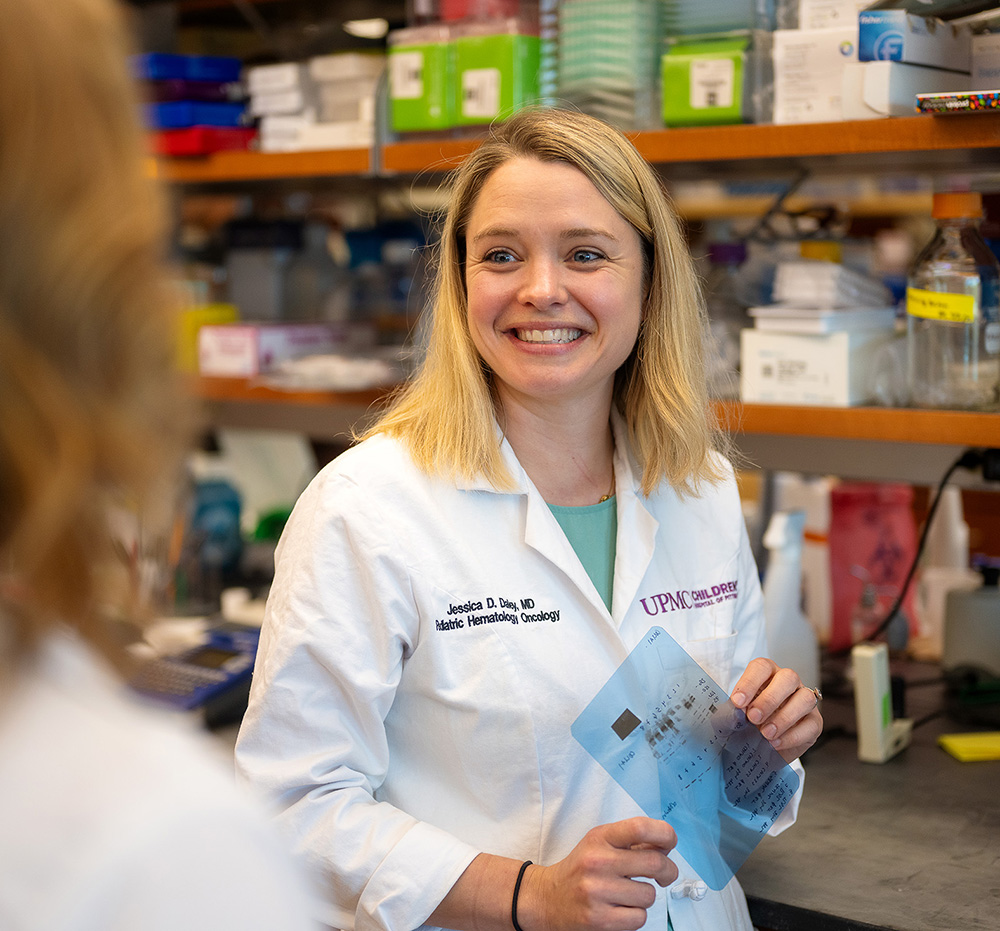
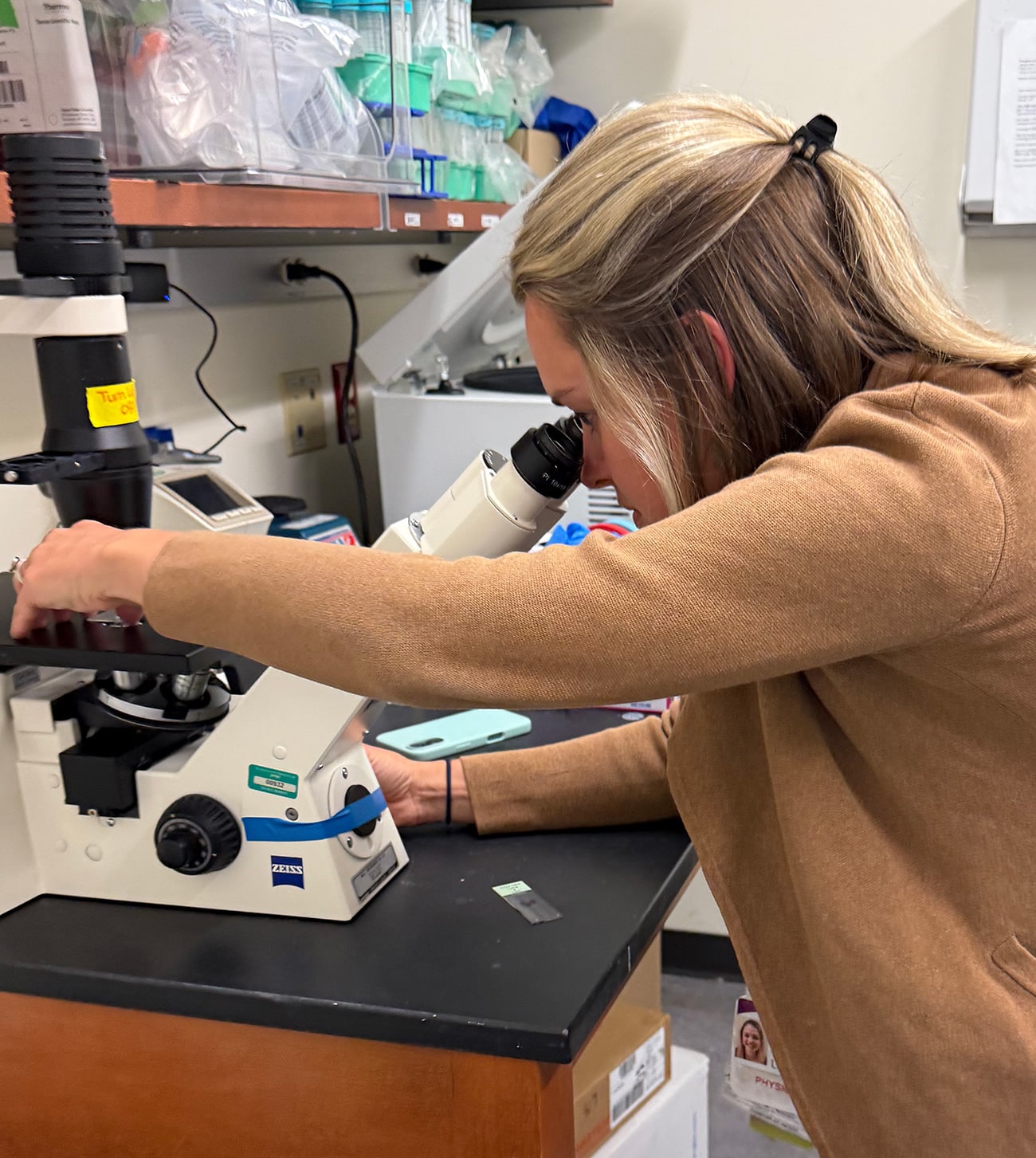
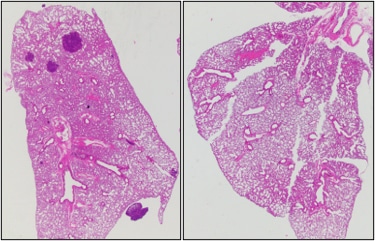
Motivated by the lack of novel therapies to treat Ewing sarcoma, Dr. Daley is focused on developing new strategies to cure this aggressive cancer. Specifically, Dr. Daley focuses on studying how the immune system interacts with Ewing sarcoma tumors and identifying ways to modulate the tumor microenvironment to improve the efficacy of immunotherapies. Most recently, Dr. Daley has shown that inhibiting TGFB, an immunosuppressive protein, can increase immune cell infiltration of Ewing tumors and decrease the spread of Ewing tumors in a new mouse model. Dr. Daley continues to work to advance this work with the goal of developing new clinical trials for patients with Ewing’s sarcoma.
https://pubmed.ncbi.nlm.nih.gov/40627445/
https://onlinelibrary.wiley.com/doi/10.1002/pbc.31917
https://pubmed.ncbi.nlm.nih.gov/40778581/
“TGFB inhibition during radiation therapy enhances immune cell infiltration and decreases metastases in Ewing sarcoma.”
Link to the article as a citation source for these.
 Problem:
Ewing sarcoma is an aggressive primary bone cancer that mainly affects adolescents and young adults. Sadly, relapsed or refractory disease that fails to respond to standard treatment is especially lethal, with an unacceptable survival rate of only 10-30%.
Federal funding for childhood cancer research—including Ewing sarcoma research—remains woefully inadequate. Childhood cancer is the leading cause of death by disease for kids under 19 here in the U.S.; yet childhood cancer research accounts for only about 3.94% of the National Cancer Institute’s annual budget. With limited funding available, physician-scientists often lack the resources they need to pilot new therapies, gather substantial data, and develop new protocols for care.
Solution:
With philanthropic support, the Dr. Daley can use cutting-edge technology, including mice harboring human immune cells, to characterize and understand ways in which we can improve the way a patient’s immune cells may respond to or “attack” Ewing tumors cells, and identify the best immunomodulatory agents to treat Ewing sarcoma. The ultimate goal of this work is to identify and test more effective combination therapies for those battling this unforgiving disease.
Dr. Daley has national involvement in the development of new therapies for Ewing sarcoma. She is one of only 10 investigators nationally leading the New Agents for Ewing Sarcoma Task Force of the Children’s Oncology Group (COG) and continues to garner attention in the field for her innovative work advancing our understanding of the sarcoma tumor microenvironment.
How You’re Making a Difference:
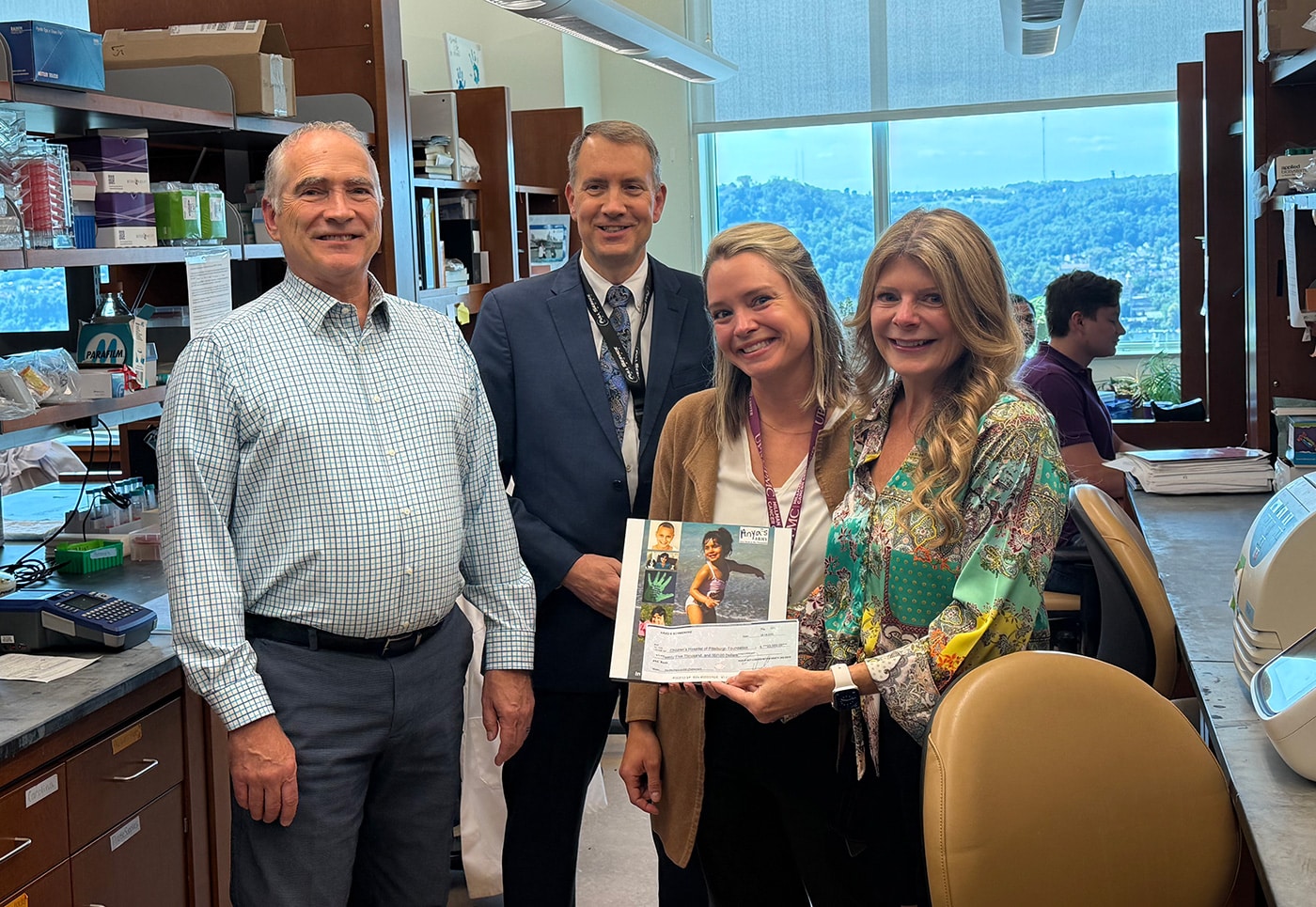
 Dr. Daley cannot do this work alone. The research is complex and expensive, with ever-evolving circumstances with which to contend. Amid an increasingly competitive federal funding environment, the sort of high-risk, high-reward studies necessary to make meaningful strides in childhood cancer research are often overlooked in favor of more traditional, established projects. If we’re going to improve treatment and outcomes for patients, progress will be driven by philanthropists, dedicated families, and clinicians from across the country working in concert to rapidly fast track what works to treat tumors and pilot safer alternatives to current therapies.
As we work to advance research and treatment, philanthropic support could help us to provide funding to perform large-scale studies of the Ewing tumor immune landscape before, during, and after the tumor “seeing” DNA damage (chemotherapy/radiation). This knowledge will help better understand what immunotherapeutic interventions may be beneficial for patients with relapsed Ewing sarcoma.
We remain grateful for the generous partnership of donors who help to accelerate and expand research, bringing cures to kids faster.